
As linen demand continues to grow across hotels, hospitals, guesthouses, resorts, nursing facilities, and professional linen service companies, investment in large-scale commercial laundry equipment has become an important consideration for entrepreneurs planning to build a laundry plant. One of the most common questions is: how much does a complete industrial laundry equipment line cost? Depending on daily processing capacity, automation level, machine specifications, heating method, and supporting systems, the total investment can range from several hundred thousand RMB to more than RMB 1 million. The final cost is determined not by a single machine, but by the overall configuration of washer-extractors, tumble dryers, flatwork ironers, folding systems, steam systems, water treatment equipment, and other supporting facilities.
- What Is Large-Scale Commercial Laundry Equipment?
- Cost of a Standard Large Commercial Laundry Plant
- Cost of a Large Central Laundry Plant
- Typical Prices of Individual Industrial Laundry Machines
- What Affects Industrial Laundry Equipment Prices?
- Should You Buy Used Laundry Equipment?
- Supporting Equipment and Infrastructure Costs
- How Much Budget Should You Prepare?
- Frequently Asked Questions
What Is Large-Scale Commercial Laundry Equipment?
In professional laundry plants, large-scale industrial laundry equipment generally refers to a complete production system built around high-capacity washer-extractors, commonly 100 kg or larger, together with commercial tumble dryers, multi-roll flatwork ironers, automatic feeders, folding machines, steam systems, chemical dosing equipment, linen transport equipment, and water treatment facilities.
A single washer-extractor cannot support a high-volume linen operation on its own. To maintain continuous production, the capacities of washing, drying, ironing, folding, and material handling equipment must be properly matched. For this reason, commercial laundries should evaluate the entire production line rather than purchasing individual machines independently.
Cost of a Standard Large Commercial Laundry Plant
A conventional large commercial laundry plant may process approximately 1,000 to 3,000 sets of linen per day, depending on textile weight, shift length, equipment efficiency, and operating procedures. These facilities commonly serve hotel chains, guesthouses, restaurants, nursing institutions, and other local commercial customers.
Typical Equipment Configuration
A typical production line may include:
- 3 to 4 fully automatic 100 kg washer-extractors
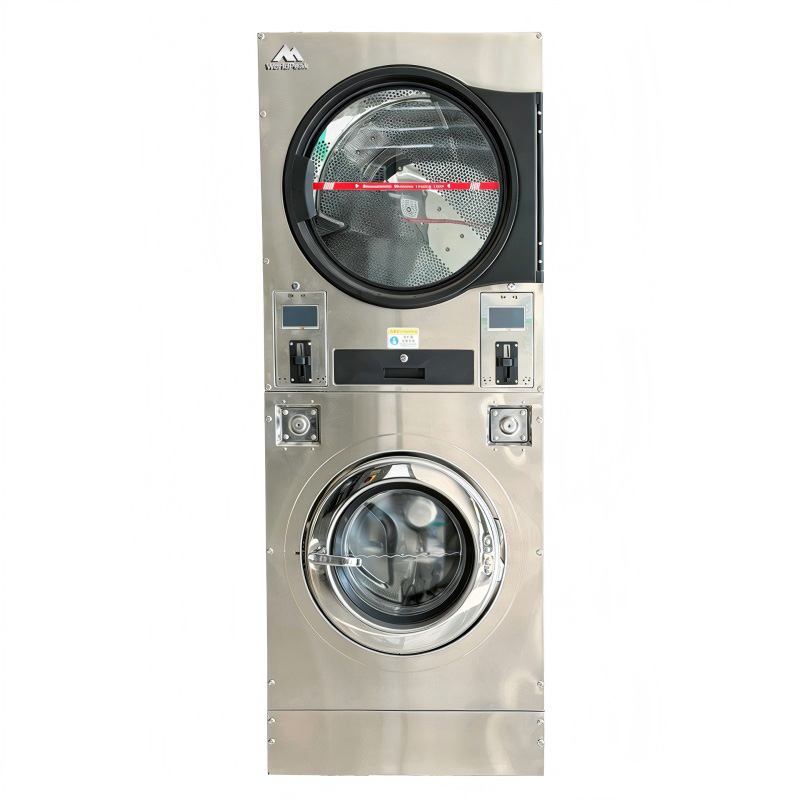
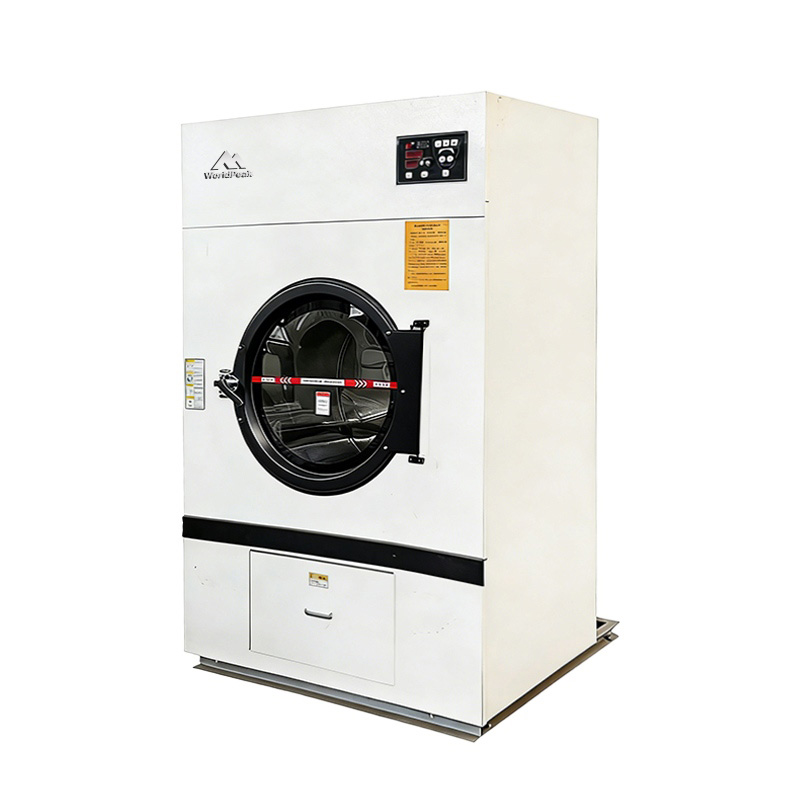
- 3 matching industrial tumble dryers
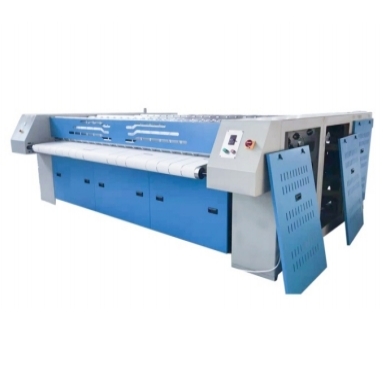
- 2 multi-roll high-speed flatwork ironers
- Automatic linen feeders
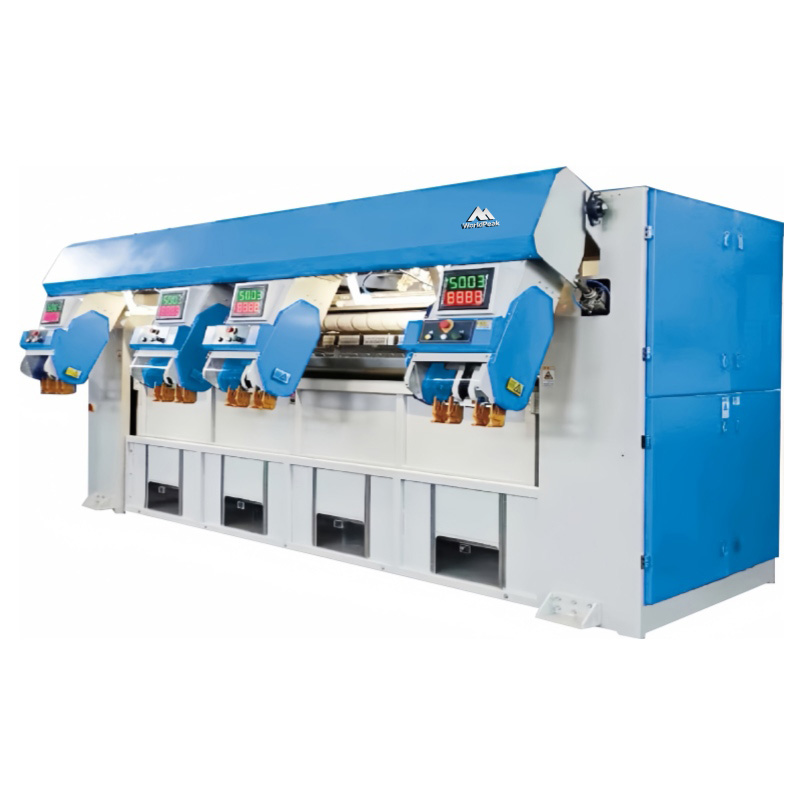
- Automatic sheet and towel folding machines
- Steam generation equipment
- Automatic chemical dosing system
- Linen transport carts
- Basic wastewater treatment equipment
Depending on machine specifications, brands, automation level, and supporting equipment, the price of a complete new production line may generally fall in the range of approximately RMB 500,000 to RMB 700,000.
Additional Equipment for Hospital Laundry
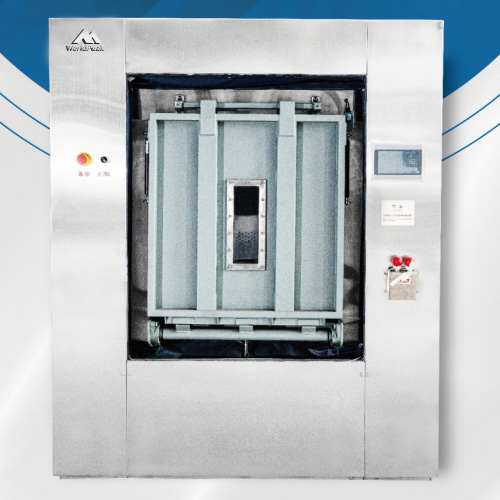
If the laundry plant processes hospital or healthcare textiles, the equipment configuration may need to include medical barrier washer-extractors. These machines use separate loading and unloading doors to support physical separation between soiled and clean linen areas.
Barrier washing systems, hygiene zoning, disinfection procedures, and supporting infrastructure can increase the overall investment. A hospital-oriented commercial laundry line may therefore require a total budget of approximately RMB 650,000 to RMB 800,000 or more, depending on project requirements.
Cost of a Large Central Laundry Plant
Very large centralized laundries may process more than 3,000 sets of linen per day and serve multiple hotels, hospitals, resorts, restaurants, and institutional customers across a wider region.
These facilities often occupy substantial production space and may operate continuously for extended hours. When daily laundry volume becomes sufficiently high, operators may choose a tunnel washer system instead of relying entirely on individual washer-extractors.
Typical Central Laundry Equipment
- Continuous batch washer or tunnel washer
- Water extraction press or high-capacity extraction system
- Multiple industrial tumble dryers
- Automatic sorting and conveyor systems
- Linen feeders
- High-speed multi-roll flatwork ironers
- Automatic folding and stacking equipment
- Steam and hot-water systems
- Automatic chemical dosing
- Water treatment and wastewater treatment systems
A highly automated centralized laundry production line may require an investment of approximately RMB 1.3 million to RMB 2 million or more, depending on production capacity, brand, level of automation, building conditions, and auxiliary systems.
Tunnel washer systems offer high throughput and reduced manual handling, but their initial investment and infrastructure requirements are considerably higher. They are therefore generally more suitable for businesses with stable, long-term, high-volume linen contracts.
Typical Prices of Individual Industrial Laundry Machines
Although complete production-line pricing is more useful for project planning, understanding the approximate cost of individual machines can help operators prepare a more detailed investment budget.
100 kg Industrial Washer-Extractor Price
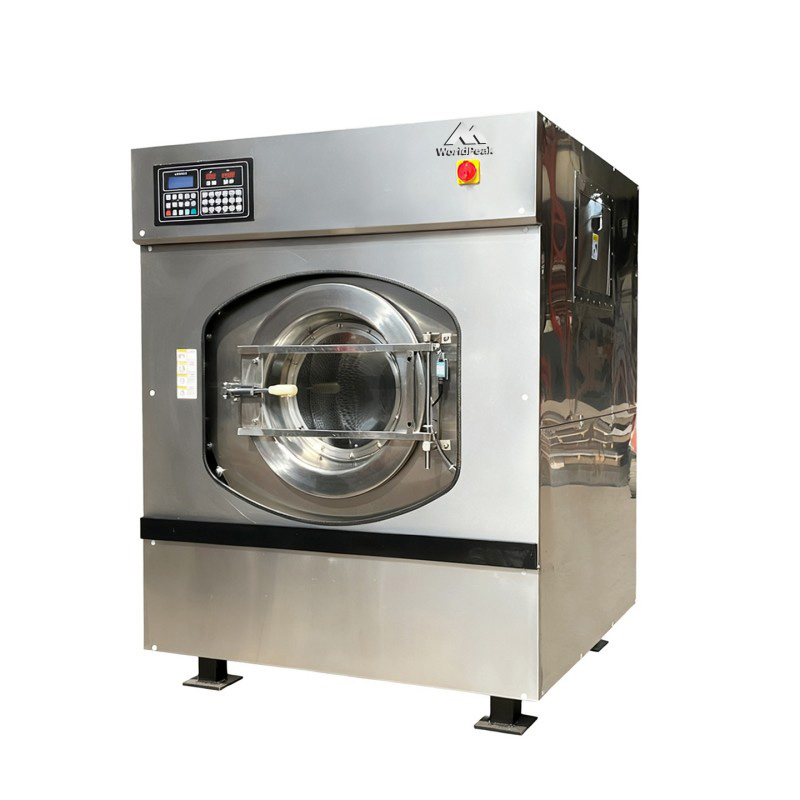
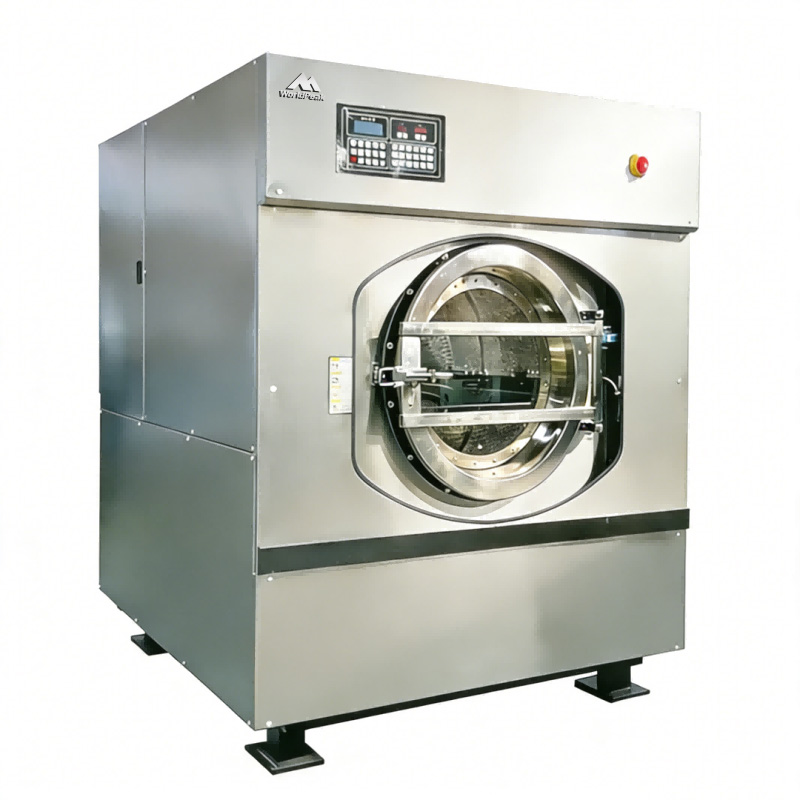
A standard 100 kg industrial washer-extractor may cost approximately RMB 45,000 to RMB 75,000, depending on drum material, drive system, heating method, controller, extraction speed, and manufacturer.
Variable-frequency models generally cost more than basic fixed-speed machines, but they can provide smoother speed control and may offer better operational efficiency in high-frequency commercial use.
150 kg and 200 kg Washer-Extractor Price
Extra-large washer-extractors with capacities of 150 kg or 200 kg require stronger frames, larger drums, higher-power motors, and more robust transmission systems. Depending on configuration, unit prices may range from approximately RMB 110,000 to RMB 220,000.
100 kg Industrial Tumble Dryer Price
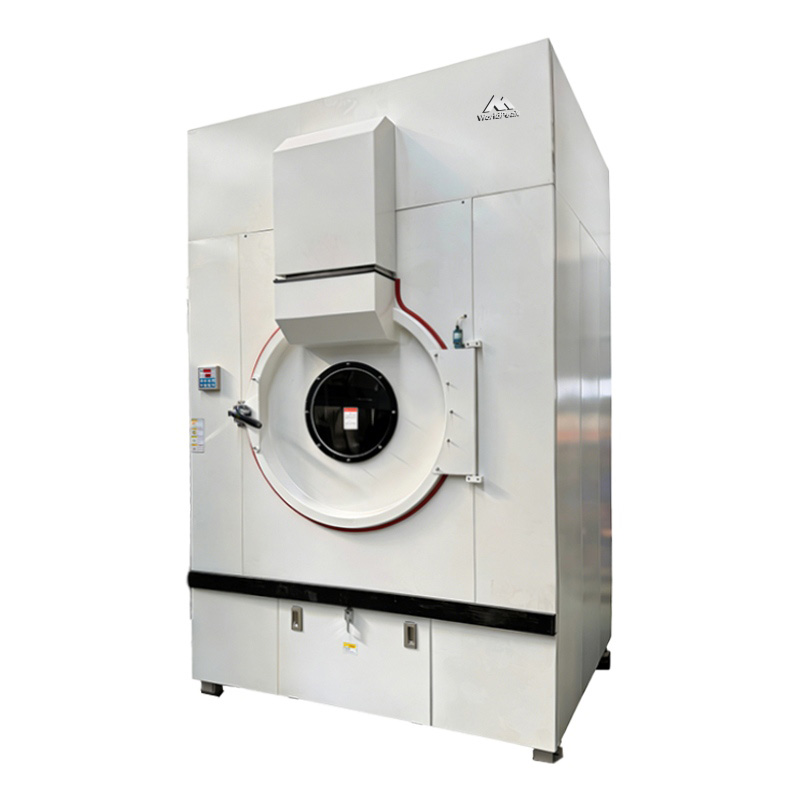
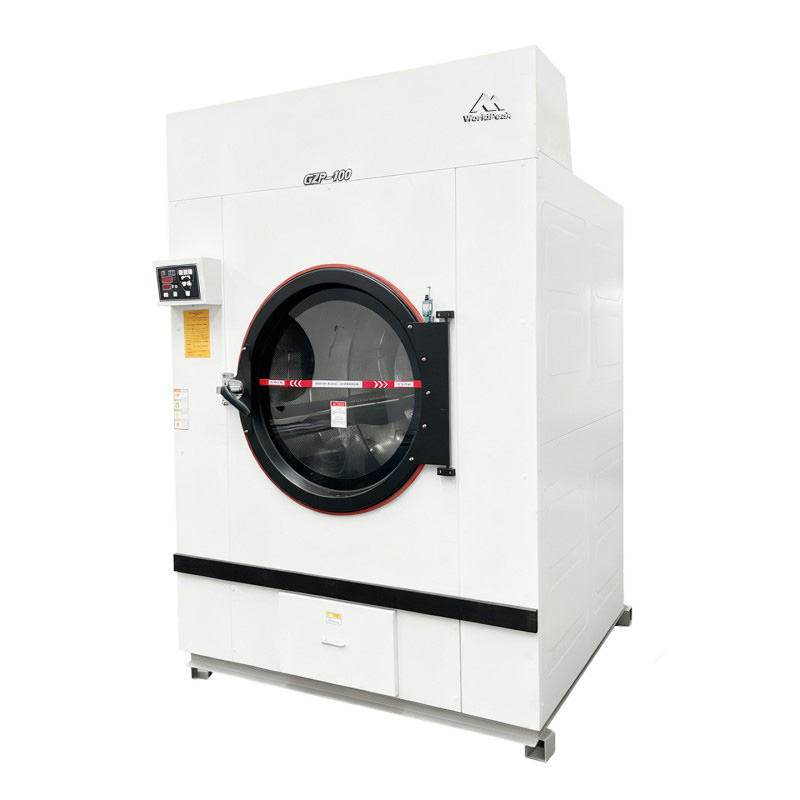
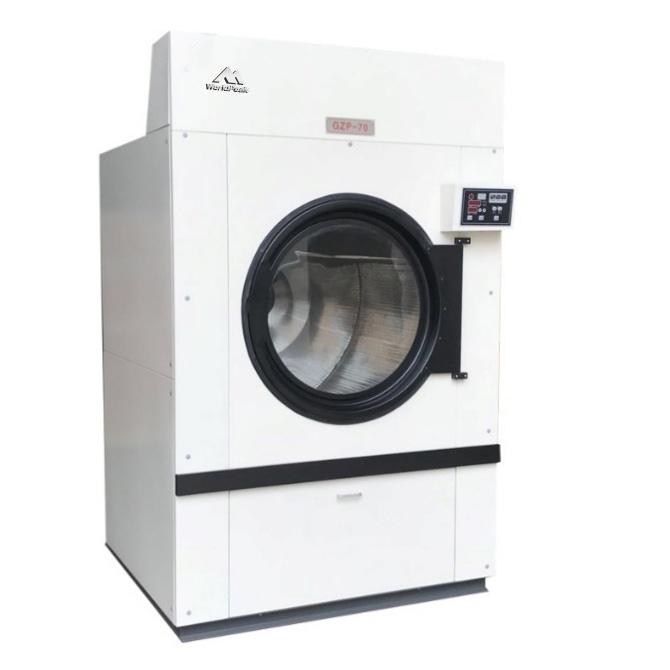
A 100 kg commercial tumble dryer may cost approximately RMB 55,000 to RMB 75,000, depending on heating method, airflow design, heat-recovery configuration, controller, and energy-saving features.
For high-volume commercial laundries, steam-heated or energy-efficient drying systems are often selected to help manage long-term operating costs.
Flatwork Ironer Price
The price of a commercial flatwork ironer varies significantly according to roll diameter, number of rolls, heating method, ironing width, operating speed, and automation level.
Basic industrial ironers may cost more than RMB 100,000, while larger multi-roll high-speed systems may cost RMB 150,000 or more.
Automatic Folding Machine Price
Automatic linen folding machines generally require a greater investment than manual finishing equipment. Depending on folding channels, control systems, linen size, and production speed, prices may start from approximately RMB 60,000 per machine and increase significantly for higher-capacity models.
What Affects Industrial Laundry Equipment Prices?
Two machines with the same rated capacity can differ in price by tens of thousands of RMB. Several technical and commercial factors explain these differences.
1. Machine Construction and Materials
The thickness and grade of stainless steel used in the drum, outer cylinder, panels, and other wet-contact components can affect durability and equipment cost. Machines designed for heavy commercial operation generally use more robust structural components to withstand repeated high-load washing and extraction cycles.
2. Motor and Drive System
Fixed-speed machines usually have a lower purchase price, while variable-frequency drive systems offer more flexible control of washing and extraction speeds. In laundries operating multiple shifts per day, drive-system efficiency, vibration control, and long-term maintenance requirements should all be considered.
3. Heating Method
Commercial laundry equipment may use electric heating, steam heating, gas heating, or other thermal systems. The most suitable option depends on local energy prices, available utilities, production volume, and equipment type.
Although steam systems require additional infrastructure such as boilers, piping, and maintenance, they are commonly used in large laundries where several machines require thermal energy simultaneously.
4. Automation Level
Automatic chemical dosing, linen feeding, folding, conveying, sorting, and centralized control systems can increase initial equipment investment but reduce repetitive manual handling and improve production consistency.
5. Brand and After-Sales Service
Equipment prices also vary according to manufacturer reputation, component quality, warranty coverage, spare-parts availability, installation support, and after-sales maintenance. For commercial laundries, long-term service capability can be as important as the initial purchase price.
6. Complete-Line Purchase vs. Individual Machines
Purchasing a complete laundry production line from one supplier may simplify equipment matching, installation, commissioning, and after-sales support. Some suppliers may also offer package pricing when multiple machines are purchased together.
Should You Buy Used Large-Scale Laundry Equipment?
Entrepreneurs with limited budgets may consider purchasing used industrial laundry equipment. Second-hand machines can cost substantially less than new equipment, but the lower purchase price should be weighed against potential maintenance and downtime risks.
Before purchasing used machines, buyers should carefully inspect:
- Drum and bearing condition
- Motor and inverter status
- Heating system
- Control system
- Door seals and valves
- Historical maintenance records
- Availability of spare parts
- Remaining warranty or service support
For a laundry plant that depends on continuous daily production, unexpected equipment failure during peak periods can cause production delays and affect customer service. Used machines may therefore be better suited to backup capacity or short-term applications unless their condition has been thoroughly verified.
Supporting Equipment and Infrastructure Costs
When calculating the total investment in a commercial laundry plant, operators should not focus only on washer-extractors, dryers, ironers, and folding machines. Supporting equipment and building infrastructure can represent a significant part of the total project cost.
Common Supporting Equipment
- Steam boiler or steam generator
- Automatic chemical dosing system
- Linen transport carts
- Sorting tables and storage racks
- Water softening and treatment equipment
- Wastewater treatment equipment
- Air compressor
- Ventilation and exhaust systems
Building and Utility Modifications
Additional budget may also be required for:
- Floor waterproofing
- Drainage systems
- Water supply piping
- Electrical distribution upgrades
- Steam or gas piping
- Ventilation ducts
- Equipment foundations
- Fire-safety modifications
Wastewater discharge and environmental requirements vary by location and project type. Operators should confirm applicable local regulations during the planning stage and include any required treatment equipment or infrastructure in the initial budget.
How Much Budget Should You Prepare for a Large Commercial Laundry?
For a conventional commercial laundry plant processing approximately 1,000 to 3,000 sets of linen per day, a complete equipment budget of around RMB 500,000 to RMB 700,000 may provide a practical reference range.
If the facility processes medical textiles and requires barrier washing equipment, enhanced hygiene zoning, and additional supporting systems, the budget may increase to approximately RMB 650,000 to RMB 800,000 or more.
For large centralized laundries with stable high-volume orders, a tunnel washer production line and highly automated finishing system may require an investment of RMB 1.3 million to RMB 2 million or more.
The final equipment plan should be based on actual daily linen weight, operating hours, customer mix, textile categories, required turnaround time, available utilities, building size, labor costs, and expected future expansion.
Frequently Asked Questions About Large-Scale Laundry Equipment
How much does a complete commercial laundry equipment line cost?
A standard large commercial laundry production line may cost approximately RMB 500,000 to RMB 700,000, while highly automated centralized laundry systems can exceed RMB 1 million. The final price depends on capacity, equipment type, automation, brand, and supporting infrastructure.
How much does a 100 kg industrial washing machine cost?
A 100 kg industrial washer-extractor may cost approximately RMB 45,000 to RMB 75,000 depending on the manufacturer, heating method, drive system, drum construction, controller, and extraction performance.
What equipment does a large commercial laundry need?
A typical large laundry requires washer-extractors, tumble dryers, flatwork ironers, feeders, folding machines, chemical dosing systems, steam or heating equipment, linen transport equipment, and appropriate water and wastewater treatment facilities.
When should a laundry use a tunnel washer?
A tunnel washer is generally suitable for centralized laundries with stable, high daily linen volumes. For smaller plants, multiple washer-extractors may provide greater flexibility with a lower initial investment.
Is it cheaper to buy a complete laundry production line from one supplier?
A complete-line purchase can simplify system matching, installation, commissioning, and maintenance coordination. Package pricing may also be available, although actual discounts depend on the supplier, order size, and equipment configuration.
Should I buy new or used industrial laundry equipment?
Used equipment can reduce initial investment, but buyers should consider maintenance history, remaining service life, spare-parts availability, warranty coverage, and potential downtime. For critical production equipment in a long-term commercial laundry operation, new machines generally provide more predictable reliability and support.
What is the most important factor when choosing large laundry equipment?
The most important factor is matching production capacity to actual daily demand. Oversized equipment increases capital costs, while undersized equipment can create bottlenecks. Washing, drying, ironing, and folding capacities should therefore be planned as one integrated production system.
The cost of large-scale commercial laundry equipment depends on much more than the price of a washer-extractor. A complete laundry plant requires coordinated investment in washing, drying, ironing, folding, material handling, chemical dosing, heating, water treatment, and building infrastructure.
For a standard commercial laundry processing 1,000 to 3,000 sets of linen per day, a complete equipment investment of around RMB 500,000 to RMB 700,000 may serve as a useful reference. Hospital-oriented laundries generally require additional investment in barrier washing and hygiene-control systems, while large centralized plants may require million-RMB-level tunnel washer and automation solutions.
Rather than choosing equipment based solely on the lowest purchase price, operators should evaluate daily order volume, textile categories, required processing speed, energy conditions, available space, labor costs, maintenance support, and future expansion. A properly matched industrial laundry equipment system can provide a better balance between initial investment, production efficiency, operating cost, and long-term reliability.