
In hotels, hospitals, commercial laundries, guesthouses, restaurants, and other service industries, linen is one of the most frequently used and replaced textile categories. The cleanliness, smoothness, and hygiene of bed sheets, duvet covers, towels, tablecloths, medical textiles, and other linen products directly affect customer experience, service quality, and environmental hygiene. Commercial linen processing is very different from household laundry because it involves larger volumes, higher washing frequencies, stricter quality requirements, and faster turnaround times. For this reason, professional facilities normally require a complete commercial linen washing equipment system that combines washing, drying, ironing, folding, chemical dosing, and supporting equipment into a standardized production process.
- What Is Commercial Linen Washing Equipment?
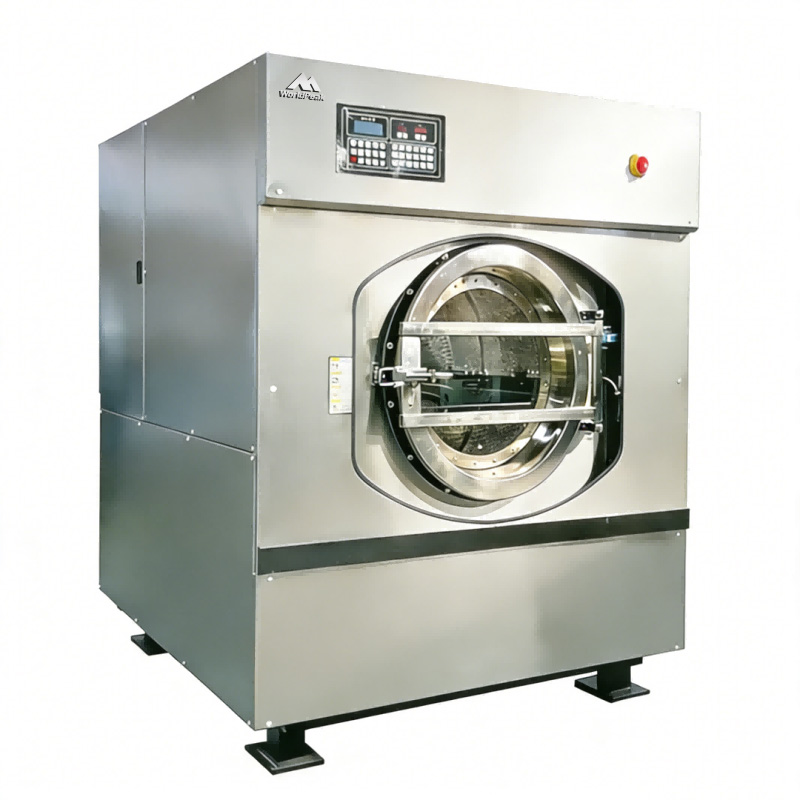
- Industrial Washer-Extractors for Linen Washing
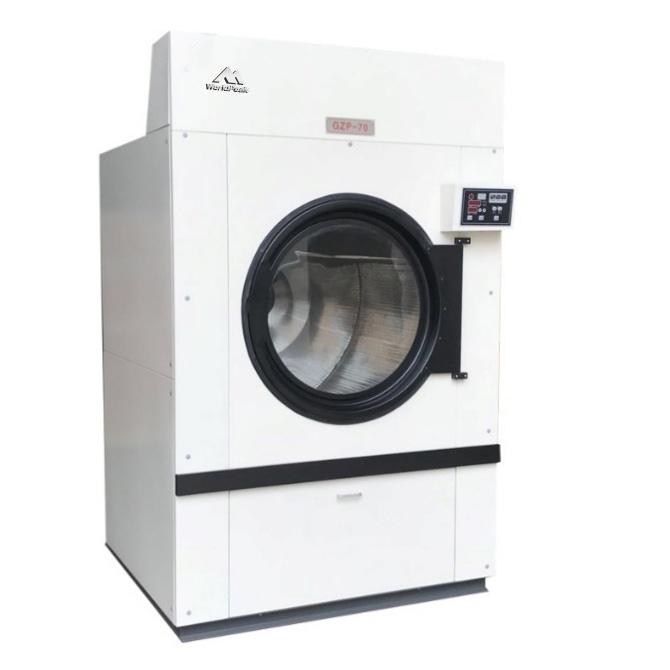
- Industrial Tumble Dryers for Linen
- Flatwork Ironing and Folding Equipment
- Auxiliary Equipment for Linen Processing
- Linen Equipment Configurations by Application
- How to Choose Linen Washing Equipment
- Frequently Asked Questions
What Is Commercial Linen Washing Equipment?
Commercial linen washing equipment refers to a complete group of machines used to wash, extract, dry, iron, fold, and prepare large quantities of reusable textiles for commercial or institutional use.
A typical linen-processing system consists of three main production sections:
- Washing and extraction
- Drying
- Ironing, folding, and finishing
Depending on the size and type of facility, the system may also include automatic chemical dosing, water treatment, linen sorting, transport equipment, steam systems, and specialized hygiene equipment.
These machines work together as one production line. Proper equipment matching helps prevent bottlenecks between washing, drying, ironing, and folding while improving production consistency.
Industrial Washer-Extractors: The Core of Linen Washing
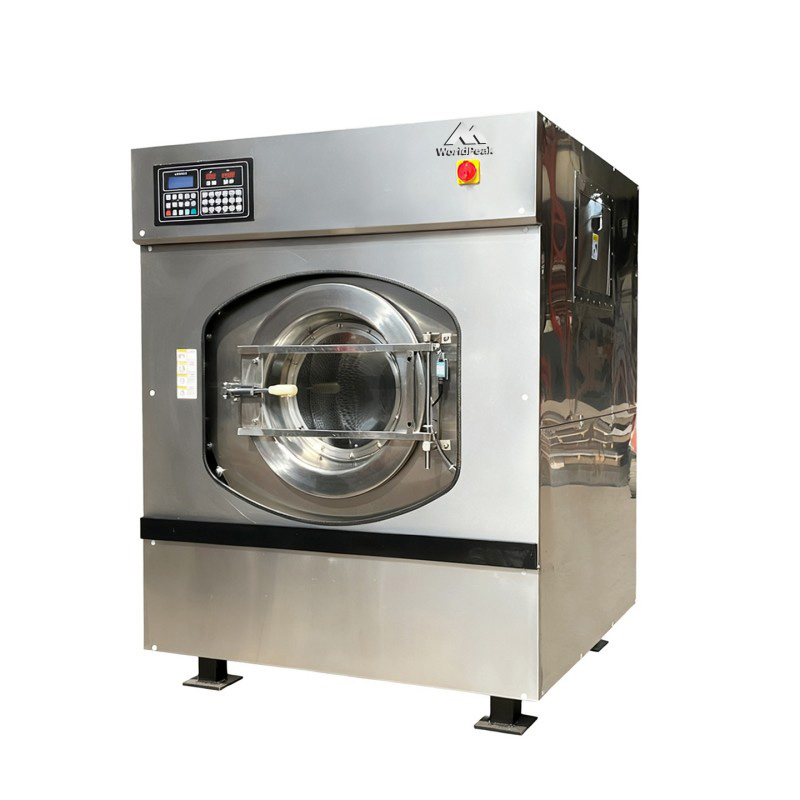
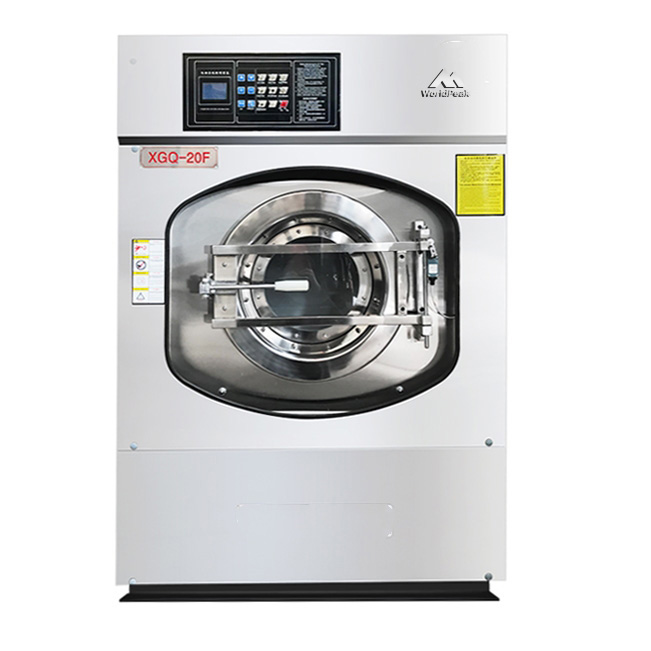
The industrial washer-extractor is the core machine in a professional linen laundry system and the starting point of most commercial linen-processing operations.
Unlike traditional systems that use separate washing and extraction machines, a washer-extractor combines washing, rinsing, draining, and high-speed extraction in a single drum. This reduces manual textile handling and prepares the linen more efficiently for the next stage of production.
Programmable Washing for Different Linen Types
Modern industrial washer-extractors can store multiple washing programs for different textile categories, including:
- Hotel bed sheets
- Duvet covers
- Pillowcases
- Towels and bath towels
- Restaurant tablecloths and napkins
- Uniforms and workwear
- Healthcare textiles
Operators can adjust washing time, water temperature, water level, drum speed, rinse frequency, chemical dosage, and extraction speed according to fabric type and soil level.
Improved Washing Consistency
Standardized programs make it easier to maintain consistent washing results between batches. Appropriate combinations of water, mechanical action, chemicals, temperature, and time can help remove common commercial laundry soils such as perspiration, grease, food stains, and general dirt.
High-Speed Extraction
After washing and rinsing, high-speed extraction removes a significant amount of residual water from the textiles. Lower residual moisture can shorten the subsequent drying process and improve the overall throughput of the laundry facility.
Enclosed Washing Process
Commercial washer-extractors complete the washing and extraction process inside an enclosed drum. This reduces unnecessary handling between different machines and helps create a cleaner and more organized production workflow.
Industrial Tumble Dryers for Linen Processing
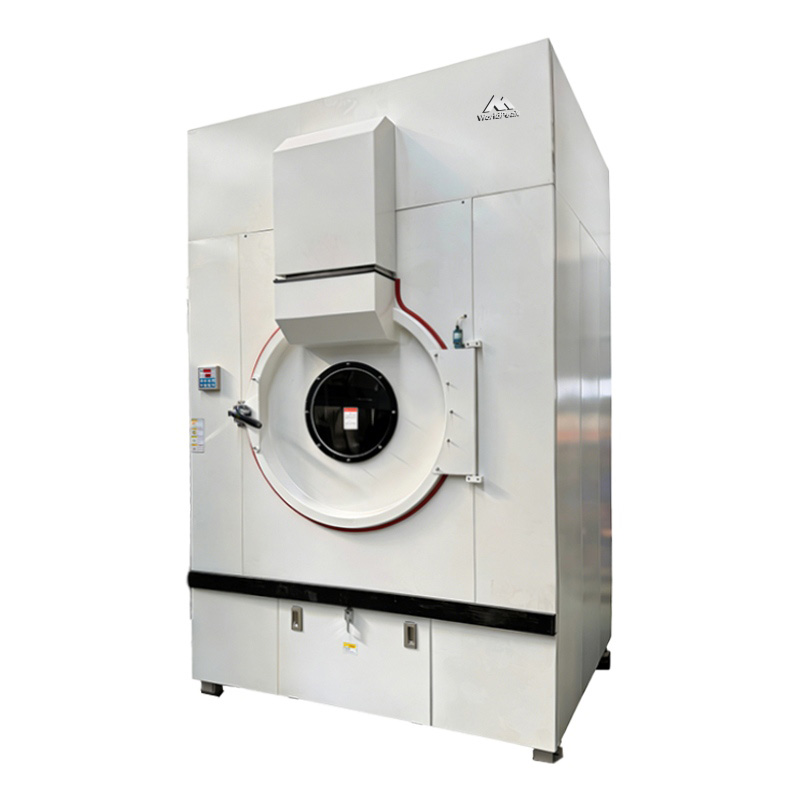
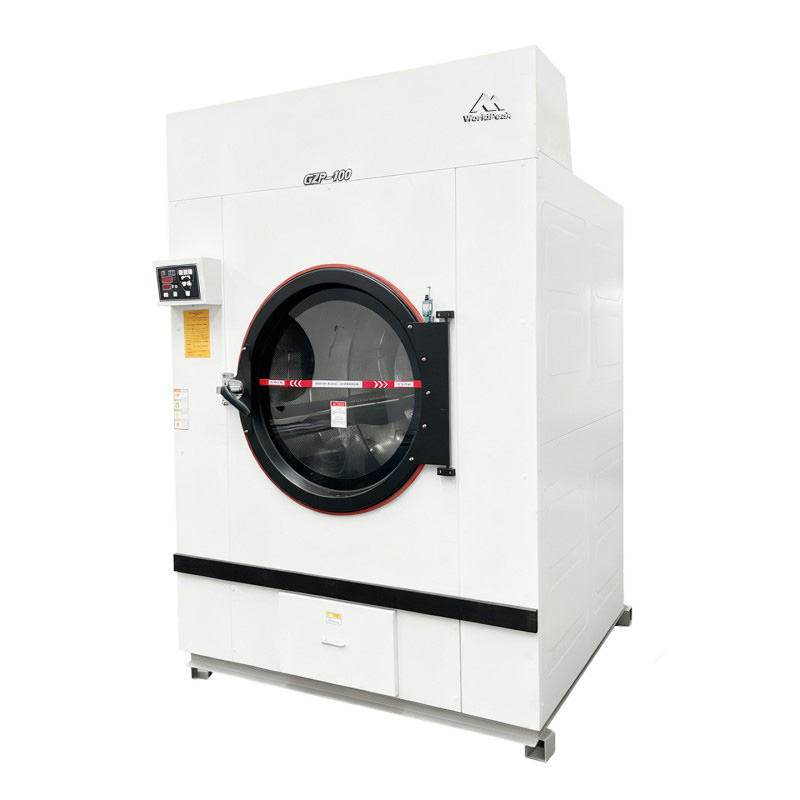
Even after high-speed extraction, washed linen still contains residual moisture. For this reason, industrial tumble dryers are an important part of professional linen processing.
Natural air drying is often unsuitable for commercial laundries because it depends heavily on weather, humidity, space, and environmental conditions. It can also create unpredictable turnaround times during rainy or humid periods.
Benefits of Commercial Linen Dryers
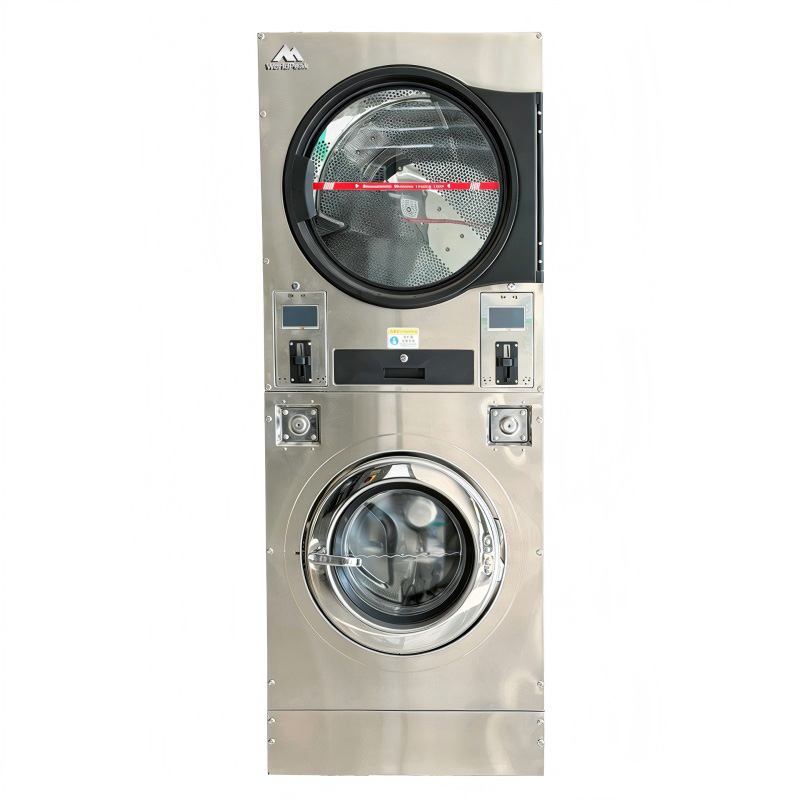
Industrial tumble dryers provide controlled airflow and temperature to remove moisture efficiently and consistently.
Key advantages include:
- Faster drying than natural air drying
- Reduced dependence on weather conditions
- More predictable laundry turnaround times
- Reduced risk of linen remaining damp for extended periods
- Improved production continuity
- Suitable processing for towels and other textiles requiring complete drying
Temperature Control
Different textiles require different drying temperatures and cycle times. Towels may require sufficient drying to maintain softness and bulk, while delicate or lightweight fabrics may require lower temperatures to reduce unnecessary thermal stress.
Matching Dryer and Washer Capacity
Dryer capacity should be matched to washer-extractor output. If washing capacity is significantly higher than drying capacity, wet linen may accumulate between production stages and create a bottleneck.
Flatwork Ironing and Folding Equipment
After washing and drying, the appearance of commercial linen becomes an important quality consideration. Sheets, duvet covers, pillowcases, and tablecloths often require ironing and folding before they are returned to use or delivered to customers.
Flatwork Ironers
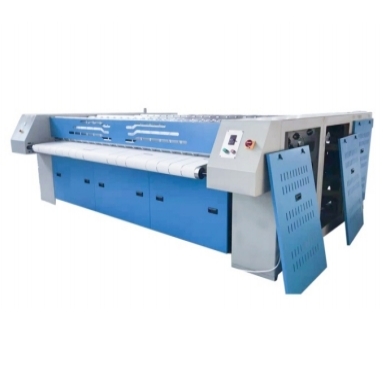
A flatwork ironer is designed for large flat textiles such as bed sheets, duvet covers, pillowcases, and table linen.
The machine uses heated rollers or other controlled ironing surfaces to remove wrinkles and produce a smooth, consistent finish. Compared with manual ironing, flatwork ironers provide much higher processing capacity and are more suitable for commercial-scale linen operations.
Automatic Linen Feeders
Automatic or semi-automatic feeders help spread and guide large linen items into the flatwork ironer. This reduces repetitive manual positioning and can improve the operating speed of the finishing line.
Automatic Folding Machines
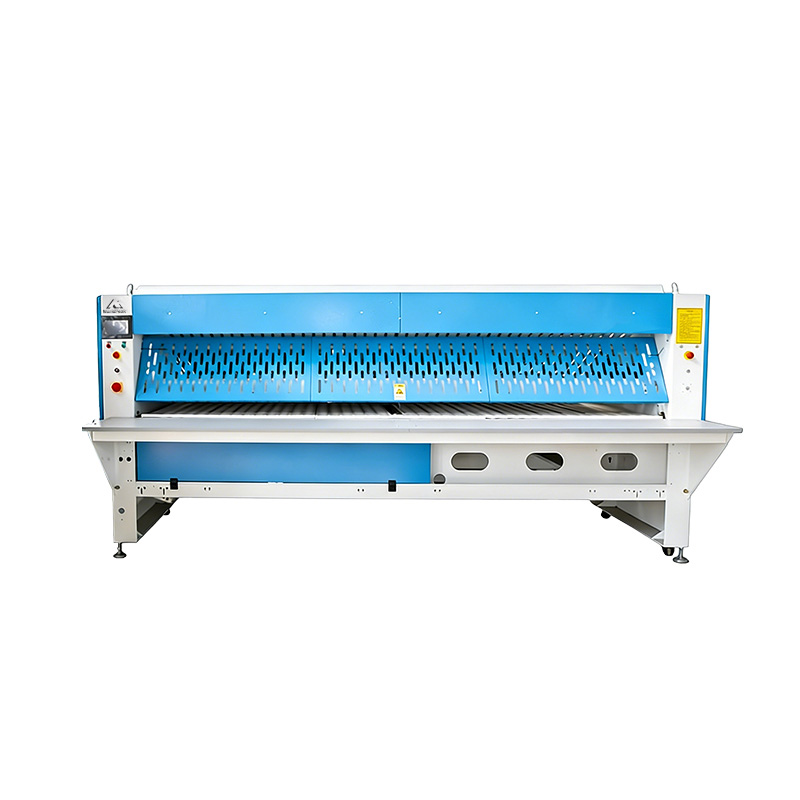
After ironing, an automatic linen folding machine can fold, count, stack, and organize finished linen according to preset programs.
For high-volume commercial laundries, a complete finishing line may include:
- Automatic feeder
- Flatwork ironer
- Automatic folding machine
- Stacking or collection system
This integrated setup can reduce repetitive labor and improve the consistency of finished linen dimensions and presentation.
Auxiliary Equipment for Commercial Linen Processing
A complete linen washing system also depends on several types of auxiliary equipment. These supporting systems help improve workflow, washing consistency, machine reliability, and hygiene management.
Automatic Chemical Dosing System
An automatic chemical dosing system supplies predetermined quantities of detergent, alkali, bleach, disinfectant, softener, and other laundry chemicals according to the selected wash program.
This helps maintain consistency between batches and reduces the risk of excessive or insufficient manual chemical addition.
Water Treatment Equipment
Water quality can affect both washing performance and machine condition. Water softening and treatment systems can help reduce mineral buildup and scale in washers, steam equipment, and piping.
In hard-water areas, appropriate water treatment may also help improve detergent performance and reduce undesirable changes in textile feel and appearance.
Linen Sorting Equipment
Before washing, linen should be classified according to textile type, color, soil level, customer, or hygiene requirements. Sorting tables, storage racks, bags, and collection systems help organize this process.
Linen Transport Carts
Dedicated transport carts are commonly used to move linen between receiving, sorting, washing, drying, finishing, storage, and dispatch areas.
Where hygiene management requires it, separate carts or clearly identified transport systems should be used for soiled and clean linen.
Water and Wastewater Systems
Commercial laundry facilities use significant quantities of water and generate wastewater containing detergents, lint, suspended solids, and other residues. Appropriate drainage and wastewater management should therefore be included in laundry facility planning.
Discharge requirements vary by location, so operators should confirm applicable local environmental standards before installation.
Linen Washing Equipment Configurations by Application
Different industries have different requirements for linen volume, finishing quality, hygiene, and processing speed. Equipment should therefore be selected according to the specific operating environment.
Small Hotels and Guesthouses
Small accommodation businesses with relatively low linen volumes may use a streamlined configuration consisting of:
- Small or medium-capacity washer-extractor
- Matching tumble dryer
- Basic flatwork ironer
- Linen carts and worktables
This configuration provides the basic washing, drying, and finishing functions required for in-house linen processing.
Large Hotels and Resorts
Hotels with substantial daily linen turnover may require:
- Multiple high-capacity washer-extractors
- Multiple commercial tumble dryers
- Automatic chemical dosing
- Linen feeder
- Multi-roll flatwork ironer
- Automatic folding machine
- Water treatment system
The capacities of each production stage should be balanced to ensure rapid linen turnaround.
Restaurants and Catering Businesses
Restaurant and catering linen frequently includes tablecloths, napkins, kitchen textiles, and uniforms. These items often require effective grease removal as well as consistent ironing and finishing.
A washer-extractor, dryer, and flatwork ironer can form the core of a restaurant linen-processing system.
Professional Commercial Laundries
Commercial laundries serving multiple hotels, restaurants, institutions, or external customers require higher-capacity equipment and greater automation.
Multiple washer-extractors and dryers may be combined with automated feeding, ironing, folding, sorting, and chemical dosing systems to create a continuous production line.
Hospitals and Healthcare Facilities
Healthcare linen requires stricter hygiene management than ordinary hotel or restaurant textiles.
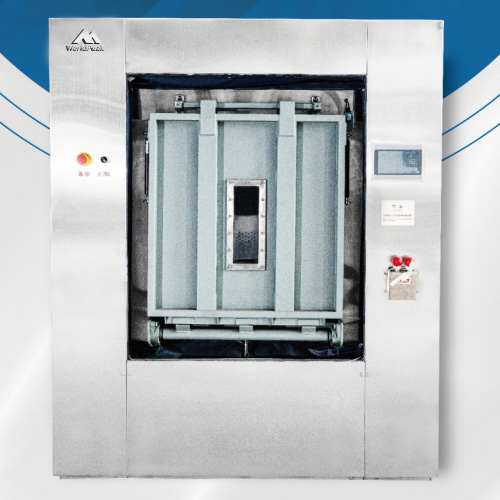
Depending on applicable local requirements, healthcare facilities may use barrier washer-extractors to maintain physical separation between contaminated and clean processing areas.
Validated washing and disinfection processes, appropriate zoning, and separate handling of soiled and clean textiles may also be required.
How to Choose Commercial Linen Washing Equipment
1. Calculate Daily Linen Volume
Estimate the total dry weight or quantity of linen processed each day. This is the basis for selecting washer, dryer, ironing, and folding capacity.
2. Identify Linen Types
Different facilities process different textiles. Hotels may focus on sheets and towels, restaurants on table linen, hospitals on healthcare textiles, and factories on uniforms or workwear.
The washing and finishing equipment should match the main textile categories.
3. Match Washing, Drying, and Finishing Capacity
Avoid selecting each machine independently. If washers can process linen faster than dryers or ironers, bottlenecks will develop and reduce overall production efficiency.
4. Consider the Required Level of Automation
Small facilities may rely more on manual feeding and folding, while medium and large laundries can benefit from automatic chemical dosing, feeding, ironing, folding, stacking, and conveying systems.
5. Evaluate Utility Conditions
Before selecting equipment, confirm:
- Electrical capacity
- Water supply
- Drainage
- Steam availability
- Gas supply where applicable
- Ventilation and exhaust requirements
- Floor loading
- Equipment access and maintenance space
6. Consider Hygiene Requirements
Healthcare facilities and other hygiene-sensitive operations may require separated processing areas, barrier washers, dedicated transport systems, or specific washing and disinfection procedures.
7. Plan for Future Expansion
Businesses expecting higher future order volumes should reserve sufficient floor space, utilities, and workflow capacity for additional washer-extractors, dryers, or finishing equipment.
Frequently Asked Questions About Linen Washing Equipment
What equipment is needed to wash commercial linen?
A basic commercial linen system normally includes an industrial washer-extractor, tumble dryer, and appropriate ironing or finishing equipment. Larger laundries may also require automatic feeders, folders, chemical dosing systems, water treatment, and linen handling equipment.
What is the best washing machine for hotel linen?
Industrial washer-extractors are commonly used for hotel linen because they combine washing, rinsing, and high-speed extraction in one machine. The ideal capacity depends on room count, occupancy, linen replacement frequency, and operating hours.
Do hotels need industrial tumble dryers?
Commercial dryers are useful when hotels require predictable linen turnaround and cannot rely on natural air drying. The dryer should be matched to the washing capacity and types of linen being processed.
What is a flatwork ironer used for?
A flatwork ironer is used for large flat textiles such as bed sheets, duvet covers, pillowcases, napkins, and tablecloths. It provides continuous commercial ironing and produces a smoother, more consistent finish than manual ironing.
Do commercial laundries need automatic folding machines?
Small laundries may fold linen manually. Medium-sized and large plants processing high volumes of sheets and other flatwork can benefit from automatic folding machines because they reduce repetitive labor and improve finishing consistency.
What equipment is required for hospital linen?
Hospital and healthcare laundries may require barrier washer-extractors, separated clean and soiled areas, validated washing and disinfection procedures, dedicated transport systems, and other hygiene-control measures according to applicable local standards.
How should washer and dryer capacities be matched?
The correct ratio depends on textile type, residual moisture after extraction, dryer cycle time, and daily production targets. The goal is to prevent wet linen from accumulating while waiting for drying.
Is water treatment necessary for a commercial laundry?
Water treatment can be beneficial where water hardness or quality affects washing performance or equipment condition. It may help reduce scale buildup and support more consistent laundry results.
How can a laundry reduce linen damage?
Proper sorting, correct washing programs, controlled chemical dosing, suitable temperatures, appropriate loading, and correct drying and ironing settings can all help reduce unnecessary textile wear.
Conclusion
Commercial linen washing equipment should be viewed as a complete processing system rather than a single washing machine. Washer-extractors provide the core washing and extraction function, tumble dryers control residual moisture, and flatwork ironers and folding machines determine the final appearance and presentation of the linen.
Supporting systems such as chemical dosing, water treatment, sorting, linen transport, and wastewater management are equally important for maintaining stable and standardized production.
The most suitable equipment configuration depends on daily linen volume, textile categories, hygiene requirements, required turnaround time, facility conditions, labor availability, and future expansion plans. By properly matching washing, drying, finishing, and auxiliary equipment, hotels, hospitals, restaurants, and commercial laundries can achieve more consistent linen quality, higher production efficiency, and more reliable long-term operation.